Founder-engineer at DF Systems. Production software for a manufacturer, a WebXR training simulator, and a collaborative grid application in progress. Everything below is live or public.
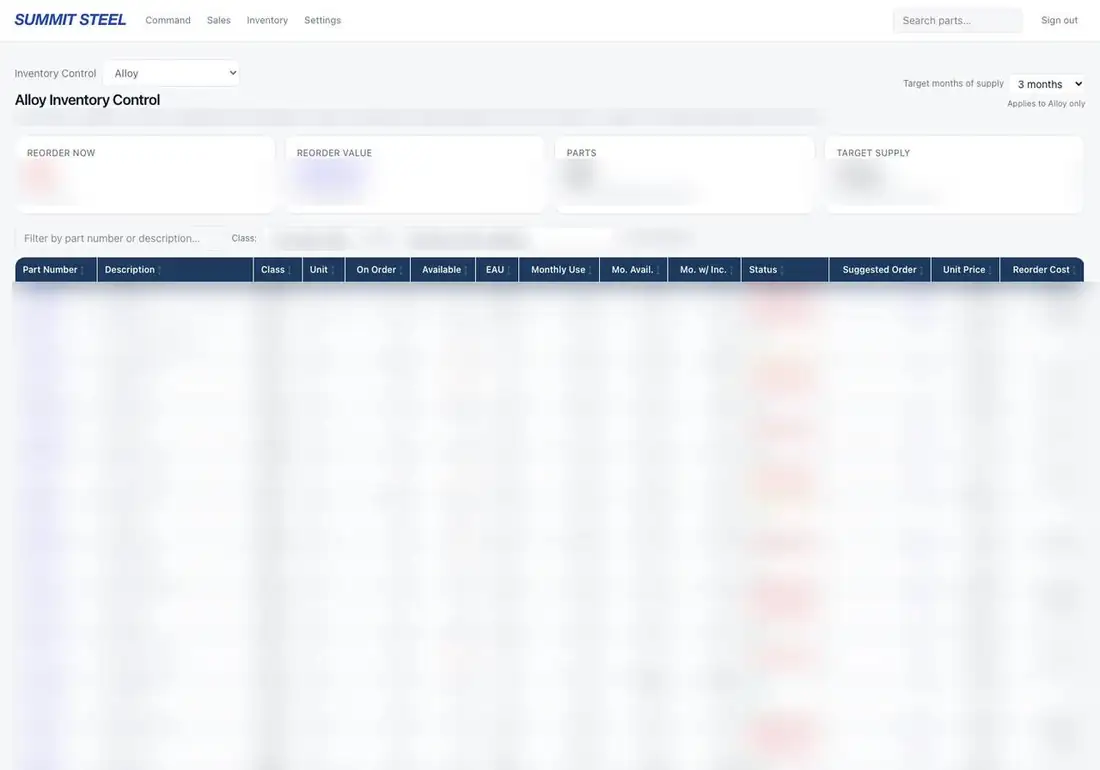
A steel supplier to Solar Turbines runs inventory, purchasing, and demand planning on a dashboard that reads the ERP they already owned. The first version was wrong because the source data was wrong; most of the engagement was reconciling it against the ERP’s own reports until they matched. In daily use since May 2026, with a written runbook and support terms.
// full case study coming soon// shipped
Valve Isolation Trainer
One TypeScript and Three.js codebase running as an immersive VR session and a 2D tablet experience. The procedure engine is a pure state machine with tests written before the implementation. Scoring runs server-side so a training record cannot be forged. CI on every push. The handoff document lists what a human verified, what a test verified, and what nobody has.
A collaborative grid application: real-time multi-user editing across stateless replicas and an automation engine delivered through a transactional outbox and an SQS worker. Kotlin and Spring Boot, React and TypeScript, Postgres, Redis, deployed to AWS EKS with Terraform and Helm. Built to close the gap between what I have shipped and what production teams run.
// phase 0 of 7. the readme has the plan.
// how i build
How I build
Plan before code. Every non-trivial change starts with an audit and a written plan that stops for review before a file is touched.
Tests first for anything with rules. Procedure engines, scoring, version checks, and automation evaluators get their tests before their implementation.
Instructions that live in the repo. Each project carries a CLAUDE.md that encodes its architecture constraints, style, and budgets, so AI tooling works inside the design rather than around it.
A verification ledger. Every handoff says what was verified by a person, what by a test, what by inspecting the live system, and what has not been verified at all. Nothing is claimed because it looked plausible.
Evals for anything that calls a model. If the product itself uses AI, a fixture of prompts and expected outputs gates the merge.